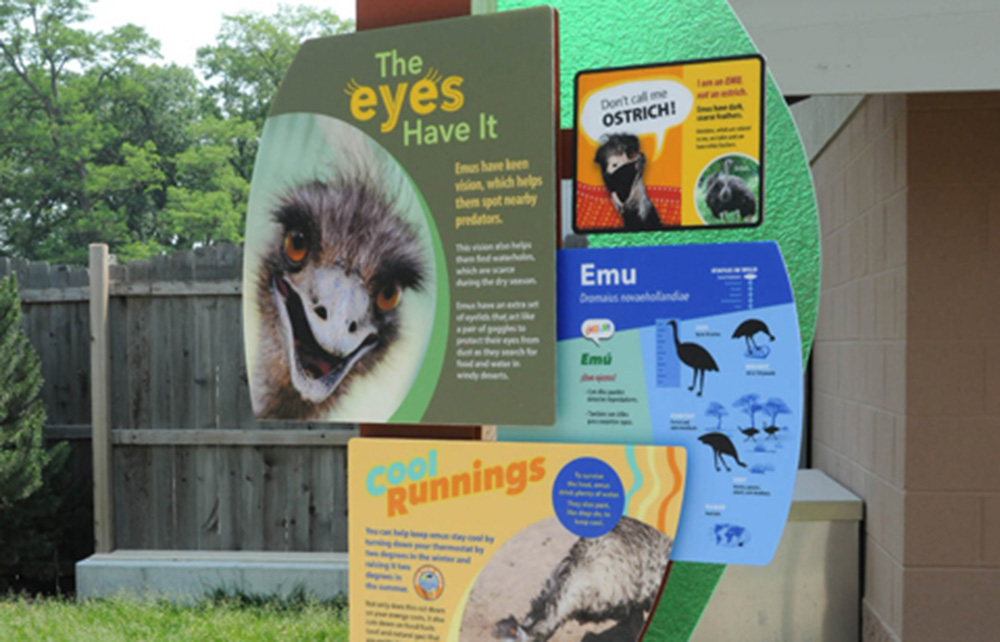
Aquariums are layered environments.
Visitors move through them in different ways. Some make a quick loop from tank to tank, while others pause and settle in. Children lean close to the glass, completely absorbed. Adults scan the panels, looking for context and detail. In outdoor exhibit areas, the pace shifts again. Guests linger a little longer, taking in the surroundings before heading back inside.
In all of those moments, the aquarium sign is quietly doing important work.
It explains what cannot be seen. It connects guests to conservation efforts. It helps families understand why that penguin, that reef fish, or that habitat matters long after the visit is over. It moves visitors through the space.
But here’s the part that often gets underestimated: aquarium signage has to work hard. Whether installed in a humid indoor gallery or in an open-air exhibit courtyard, it faces real environmental stress. Water. Cleaning protocols. Sun exposure. Constant public interaction. Year after year.
Ordering an aquarium sign is not just about artwork. It is about durability, mounting, interpretive clarity, and long-term performance. Pannier has partnered with institutions such as Adventure Aquarium in Camden, the National Aquarium in Baltimore, and the North Carolina Aquarium on Roanoke Island to manufacture durable aquarium signage galleries and exhibit spaces.
Let’s walk through what to think about before you place the order.
In Short
Aquarium signs need to perform in both indoor and outdoor environments while staying clear, engaging, and durable. The right material, mounting system, and custom design approach will determine how well your aquarium signage holds up and how effectively it supports your exhibit.
What Makes a Great Aquarium Sign?
A great aquarium sign does not shout for attention. It earns it.
It fits the environment. It feels intentional. It supports the exhibit instead of competing with it.
Inside an aquarium gallery, lighting may be low. Reflections from glass can interfere with readability. Outside, the sign might be exposed to direct sun in the morning and heavy shade in the afternoon. Visitors might lean on it. Children might trace the graphics with their fingers.
All of that matters.
A successful aquarium sign balances two priorities:
- It holds up physically.
- It communicates clearly.
If either of those fails, the exhibit suffers.
The best aquarium signage feels seamless. Visitors are learning without realizing they are reading a sign at all.
Choosing Materials for Indoor & Outdoor Aquarium Signage
If you have ever replaced signage too early, you know how frustrating that can be. Fading. Delamination. Graphics that looked great on day one but struggled after a few seasons.
Aquarium environments are not forgiving.
Indoor installations often deal with humidity, condensation, and daily cleaning. Outdoor exhibit areas introduce sun exposure, temperature swings, and steady public contact. Even a small outdoor courtyard exhibit can see more environmental stress than people expect.
That is where material selection becomes critical.
Fiberglass Embedded Panels (FE)
Pannier’s Fiberglass Embedded panels are built differently. The graphics are embedded directly into fiberglass, creating a solid, one-piece panel with no surface layer to peel away over time.
For aquarium signage, that construction makes a real difference.
These panels resist moisture. They maintain color. They are easy to clean. They are well suited for both indoor exhibits and outdoor learning spaces.
At Adventure Aquarium, Pannier manufactured custom aquarium signs for the Penguin Island exhibit. This interactive outdoor space gave guests multiple viewing angles of the African Penguins, along with educational signage integrated into frameless exhibit bases and rail mounts.
The aquarium signage included cut-to-shape Fiberglass Embedded panels and low-profile systems that allowed visitors to engage closely without compromising durability. Educational panels explained the Species Survival Plan (SSP) and Saving Animals From Extinction (SAFE) initiatives, along with penguin behavior and swim speeds.
Because the exhibit invited hands-on interaction, the signage had to withstand years of daily contact. Material choice was not optional. It was foundational.
Gel Coat Laminate (GCL)
In outdoor aquarium areas that receive prolonged sun exposure, Gel Coat Laminate panels provide enhanced resistance to UV and environmental wear. Entry plazas, open-air habitats, garden-style learning zones, and transitional spaces between indoor and outdoor exhibits can all benefit from added surface protection.
Choosing between materials is not about picking the most expensive option. It is about understanding exposure, expected lifespan, and how the signage will be used.
When panels and exhibit bases are manufactured together under one roof, material decisions are aligned with mounting systems from the start.
That alignment prevents small design oversights from becoming long-term performance issues.
Designing Aquarium Signs People Actually Read
Here’s something every aquarium knows but does not always design for: visitors are not standing still with unlimited attention.
They are walking with children. They are moving from tank to tank. They are balancing curiosity with time, noise, and crowd flow. A successful aquarium sign respects that rhythm instead of fighting it.
That does not mean simplifying everything. It means organizing information in a way that meets people where they are.
A well-designed aquarium sign typically layers information so that it works at multiple speeds:
- Immediate recognition – The species name should be easy to spot and easy to read from a comfortable standing distance.
- Quick engagement – A short, compelling fact or question invites the visitor to lean in.
- Deeper context – Habitat details, conservation messaging, or behavioral insights support those who want to spend more time.
- Visual reinforcement – Clean graphics, diagrams, or comparisons that support the text rather than compete with it.
When these elements are structured intentionally, the signage feels effortless. Visitors absorb more because they are not working to decode the layout.
Lighting plays a role as well. Indoor aquarium signage often sits in dim galleries where glare and contrast can make or break readability. Outdoor installations may shift between bright sun and shadow throughout the day. Strong contrast, thoughtful typography, and uncluttered design help ensure the aquarium signage performs consistently in both conditions.
Designing for Longevity, Not Just Launch Day
Another consideration that often gets overlooked is flexibility.
Exhibits evolve. Educational priorities shift. Individual animals become guest favorites. If every update requires removing and replacing an entire structure, the cost and disruption add up quickly.
At Adventure Aquarium, the “Featured Penguins of the Day” display illustrates how a custom aquarium sign can function as part of a larger system. Instead of installing a fixed, static panel, the signage allowed interchangeable graphics highlighting individual penguins within the Penguin Island exhibit.
That design choice accomplished more than it might appear at first glance:
- It gave visitors a more personal connection to specific animals.
- It allowed the aquarium to refresh content easily.
- It extended the usefulness of the sign structure itself.
When a custom aquarium sign is designed as a modular component rather than a one-time installation, it becomes an adaptable asset instead of a future replacement project.
In aquarium environments, where education and engagement are ongoing, that kind of foresight makes a measurable difference.
Custom Aquarium Sign Options & Mounting Considerations
Aquarium signage rarely fits into neat categories.
Some exhibits call for low-profile rail-mounted panels. Others require freestanding outdoor bases. Sometimes a wall-mounted solution keeps sightlines clean. In other cases, a cut-to-shape panel reinforces the theme of the habitat.
Custom aquarium sign options often include:
- Cut-to-shape panels
- Frameless exhibit bases
- Rail-mounted systems
- Wall-mounted installations
- Freestanding outdoor exhibit structures
Mounting decisions should be made alongside material decisions. Outdoor aquarium signage needs stability and long-term durability. Indoor signage must integrate smoothly into exhibit architecture without becoming visually heavy.
When signage panels and bases are engineered together, installation becomes more predictable and the finished result feels cohesive.
That cohesion shows.
Aquarium Sign Ideas for Indoor & Outdoor Exhibits
If you are planning aquarium signage, think beyond a basic rectangular panel.
For indoor exhibits, you might consider:
- Cut-to-shape species silhouettes
- High-contrast panels for dim galleries
- Interchangeable spotlight features
- Layered conservation storytelling
For outdoor exhibit spaces, consider:
- Educational panels along open-air habitats
- Entry signage that sets expectations before guests walk inside
- Durable freestanding bases in courtyard learning zones
- Wayfinding signage that carries exhibit themes outdoors
Outdoor aquarium signage does not need to be waterfront to face environmental stress. Sun, temperature shifts, and steady foot traffic are enough.
Designing with those realities in mind ensures the signage still looks intentional years down the road.
Ready to Order Aquarium Signs That Last?
Ordering an aquarium sign should feel thoughtful, not rushed.
Before moving forward, ask a few practical questions:
- Where will this aquarium signage live, indoors, outdoors, or both?
- How much interaction should we expect?
- Will we want to update content over time?
- What lifespan are we planning for?
Aquarium signage supports education, conservation, and public engagement. When material, design, and mounting decisions are aligned from the beginning, the result is signage that quietly does its job for years.
That is where working with the right partner matters. Pannier manufactures durable interpretive panels and exhibit bases in-house, allowing materials, graphics, and mounting systems to be engineered together from the start. Whether you need a single custom aquarium sign for an outdoor courtyard or a coordinated aquarium signage system for multiple exhibits, the focus remains the same: long-term performance and clear communication.
If you are planning new aquarium signage or upgrading an existing exhibit, connect with Pannier’s team to discuss your goals, environment, and timeline. Thoughtful planning now leads to signage that performs for years to come.
Key Takeaways
- Aquarium signs must perform in humid indoor galleries and exposed outdoor exhibit spaces.
- Material selection directly affects longevity and ongoing maintenance.
- Custom aquarium sign systems allow for interchangeable, evolving content as exhibits grow and change.
- Integrated manufacturing of panels and exhibit bases supports long-term performance and installation consistency.
FAQs
How long do aquarium signs last?
High-quality Fiberglass Embedded aquarium signs are designed to last 10 years or more, depending on exposure and maintenance. Outdoor installations may vary based on sunlight and environmental conditions.
What is the best material for an aquarium sign?
Fiberglass Embedded panels are well suited for both indoor humidity and outdoor exhibit spaces. Gel Coat Laminate panels offer additional UV resistance for sun-exposed areas.
Can aquarium signage be used outdoors?
Yes. Properly engineered aquarium signage can perform well in outdoor exhibit areas, courtyards, and entry spaces when the right material and mounting systems are selected.
Are custom aquarium signs possible?
Absolutely. Cut-to-shape panels, interchangeable graphics, and custom mounting systems are common in aquarium environments.
Can signage be updated later?
Yes. Interchangeable panel systems allow aquariums to refresh educational content without replacing the entire structure.
Final Thoughts
Aquarium signage does more than label an exhibit. It supports storytelling, reinforces conservation messaging, and shapes how visitors experience the space. When the materials are chosen carefully and the mounting systems are engineered with intention, an aquarium sign becomes a long-term asset rather than a short-term solution.
Indoor galleries, outdoor habitats, interactive zones, and transitional spaces each present different challenges. Planning for those conditions from the beginning ensures your aquarium signage continues to look and perform the way it was intended, even after years of public interaction.
Pannier works with aquariums, zoos, and interpretive environments to manufacture durable, custom aquarium signs designed for real-world conditions. From Fiberglass Embedded panels to coordinated exhibit bases and mounting systems, every component is built with longevity in mind.
If you are preparing for a new exhibit or refreshing an existing one, start the conversation early. Thoughtful planning, the right materials, and experienced manufacturing support will make all the difference in signage that performs for years to come.
Contact Our Team Today