A great national park sign does more than point the way or list a few rules. It helps visitors understand where they are, why a place matters, and how to experience it responsibly. It turns a scenic overlook into a story. It turns a trailhead into an invitation. And it quietly reinforces safety, stewardship, and respect for landscapes that deserve all three.
Across the country, national parks rely on signage to shape visitor experience at every step. Pannier has contributed to signage and interpretive programs at iconic destinations including Zion National Park, Yosemite National Park, Acadia National Park, and Death Valley National Park, as well as historic and culturally significant sites managed by the National Park Service. In each setting, signage plays a critical role in how visitors navigate, learn, and connect with place.
At Pannier, we have worked directly alongside park teams, interpreters, and designers on national park signage projects ranging from individual interpretive panels to large, multi-site wayside programs. That hands-on experience has shaped how we think about signage. It must be clear without oversimplifying. Durable without being visually heavy. And designed with the understanding that it may live outdoors for decades.
This guide focuses on national park sign planning with a special emphasis on interpretive signage, because that is where storytelling, design, accessibility, and long-term performance truly come together. Along the way, we will explore design best practices, material considerations like Fiberglass Embedment and Gel Coat Laminate, and practical planning insights drawn from real-world park projects.
In Short
- A national park sign supports navigation, safety, storytelling, and conservation.
- Interpretive signage works best when it focuses on one clear idea and uses visuals strategically.
- National park signage design must balance readability, accessibility, and respect for the landscape.
- Durable materials and mounting systems directly impact longevity and maintenance.
- Features like QR codes add value only when planned for long-term use.
- Successful park signage projects rely on collaboration, clarity, and real-world experience.
What Is the Purpose of a National Park Sign?
A national park sign has a lot to do in a short amount of time. Visitors are often standing, moving, distracted by scenery, or juggling kids, packs, or maps. The most effective signs respect that reality and deliver value quickly.
Guidance and wayfinding
Wayfinding signs help visitors move confidently through a park. Clear directional signage reduces confusion, keeps people on designated routes, and minimizes off-trail impacts that can harm sensitive environments.
Storytelling and interpretation
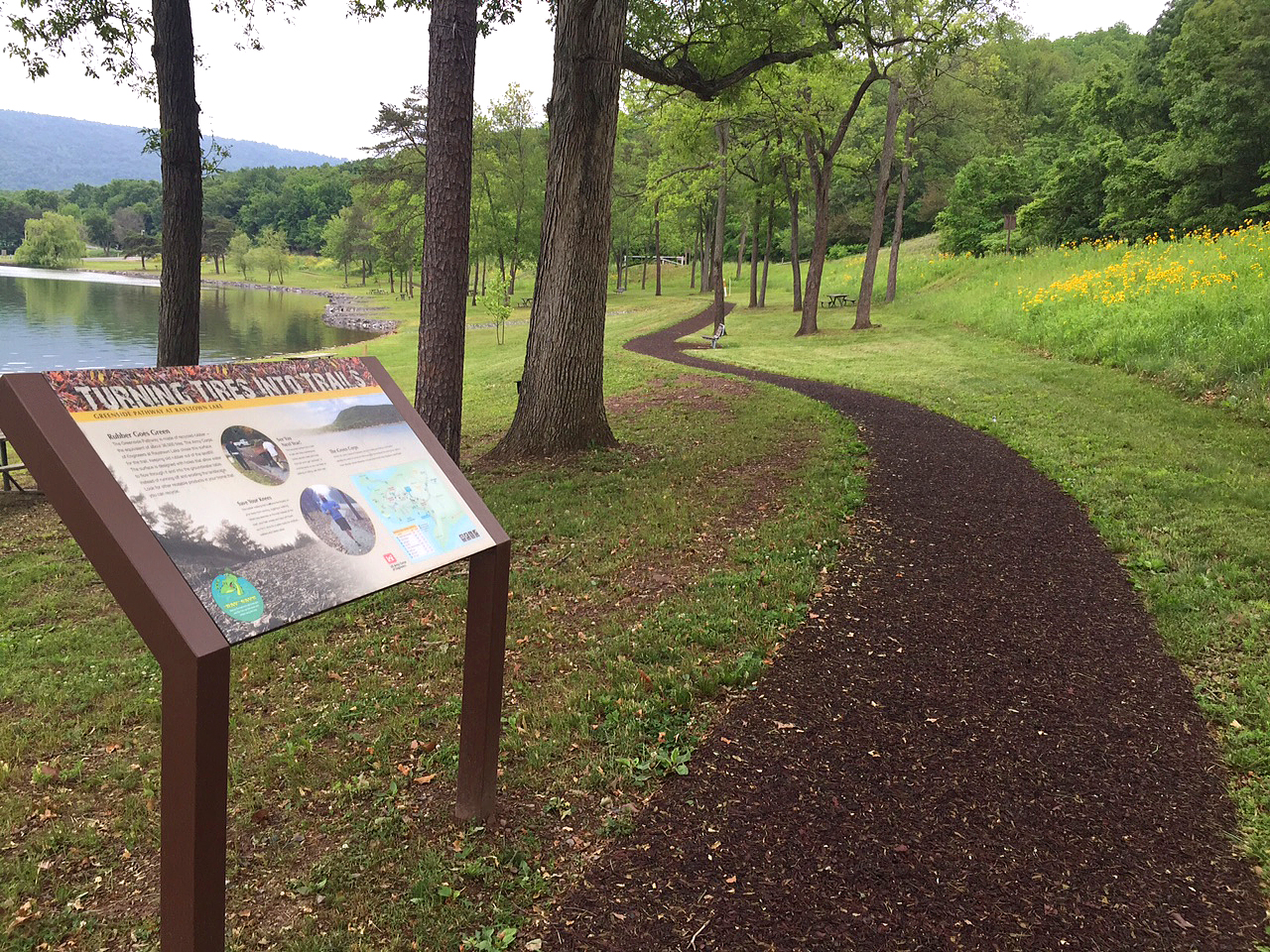
Interpretive signage explains what visitors cannot immediately see. It connects landscapes to history, geology, ecology, and culture. At San Antonio Missions National Historical Park, for example, Pannier partnered with the National Park Service on a large-scale wayside exhibit program designed to help visitors understand daily life at the Spanish frontier missions. The challenge was not a lack of content. It was distilling thousands of words of research into concise, engaging stories that could be absorbed outdoors.
Safety and protection
National park trail signs and regulatory signage help visitors make safe decisions. Clear messaging around hazards, closures, and wildlife protects people while preserving the landscapes they came to experience.
Conservation and stewardship
When visitors understand why a place matters, they are more likely to respect it. Interpretive signs support conservation by encouraging responsible behavior through education, not enforcement.
Types of National Park Signs
Most park systems use a coordinated mix of park sign types, each serving a specific purpose. Together, these signs support navigation, safety, education, and overall visitor experience.
Entrance and identity signs
Entrance signs establish arrival and set expectations. While not the focus of this guide, the national park sign front entryway often serves as a visual marker of quality and care, reinforcing the character of the park before visitors ever step onto a trail.
Wayfinding and directional signs
Wayfinding signs guide visitors to trailheads, parking areas, visitor centers, and key destinations. Consistency and clarity are critical, especially in high-traffic areas where confusion can quickly lead to congestion or off-route travel.
Trail markers and reassurance markers
Trail markers help visitors stay on route, particularly in remote or heavily traveled areas. These signs provide confidence, reinforce correct paths, and reduce the likelihood of visitors straying into sensitive environments.
Safety and regulatory signs
Rules, warnings, and closure notices protect both visitors and natural resources. Clear, well-placed regulatory signage helps people make informed decisions without detracting from the surrounding landscape.
Visitor center and exhibit signage
Orientation maps and exhibits provide essential context before visitors head into the park. These signs help set expectations, explain conditions, and introduce key stories or themes visitors will encounter.
Interpretive signs and outdoor exhibits
Interpretive signage is where education and experience intersect. Large programs may include dozens of coordinated panels installed across multiple sites. At San Antonio Missions, nearly 90 interpretive panels were installed throughout the park, each tailored to its immediate setting while maintaining a cohesive visual system that visitors could recognize and navigate intuitively.
What Makes Interpretive Signs Work in a Park Setting
Interpretive signage succeeds when it aligns with how people actually read signs outdoors. Visitors are rarely sitting down or giving a panel their full attention, so clarity and structure matter.
Start with one clear idea
Each interpretive panel should focus on a single main takeaway. Trying to communicate too many ideas at once often results in visitors skimming past without retaining anything meaningful.
Layer the information
Layered content is essential for outdoor interpretation. On the wayside exhibits at San Antonio Missions, panels were structured with a strong headline, a short summary, and supporting text and imagery. This allowed visitors to quickly grasp the main message or linger to explore the story in more depth.
Match the story to the site
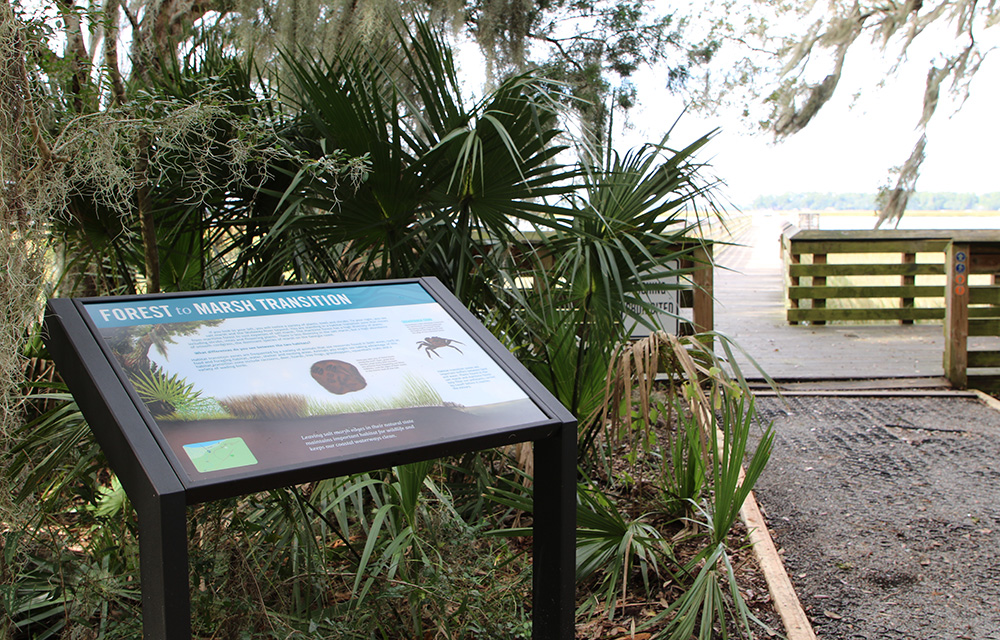
Interpretation should earn its location. Signs placed near visible features, historic structures, or landscape views should help visitors notice details they might otherwise overlook and understand why those details matter.
Let visuals do the heavy lifting
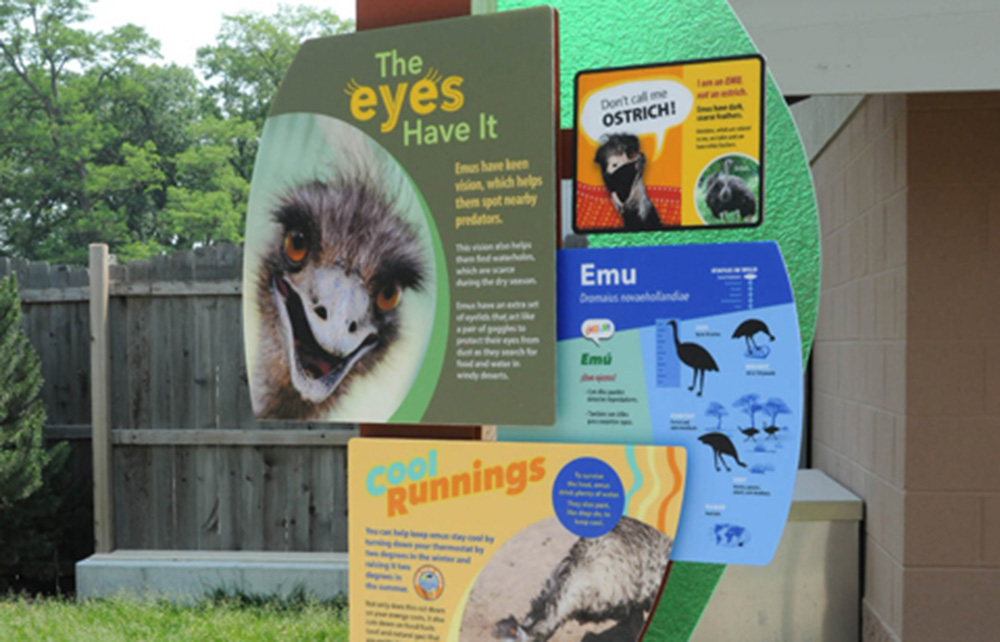
Maps, illustrations, timelines, and historic photography often communicate faster than text. In effective national park signage design, visuals are not decorative elements. They are teaching tools that help visitors connect information to what they see around them.
National Park Signage Design Best Practices
Good design supports clarity, comfort, and longevity. In national park settings, design decisions directly affect how easily visitors can read, understand, and engage with signage in real-world conditions.
Readability in outdoor environments
Text size, contrast, and spacing must account for sun glare, shadows, and varying viewing distances. These details have a direct impact on usability and determine whether visitors engage with a sign or walk past it.
Storytelling that fits the setting
Interpretive signage should feel like part of the landscape, not an interruption. Educational content does not need to feel formal, and engaging design does not require visual noise. The goal is to support the story without competing with the surroundings.
Maps and orientation elements
Simple, legible maps help visitors understand where they are and what comes next. This is especially important for national park trail signs and wayside exhibits, where quick orientation can influence both safety and enjoyment.
Accessibility and inclusive design
Accessibility should be integrated from the start, not added later. At San Antonio National Historic Park, tactile bronze elements and audio descriptions were incorporated to support visitors with visual impairments. These features expanded access while maintaining a low-profile presence in a historic setting.
Durability and Sustainability for Outdoor Park Signs
National parks are demanding environments. Signs face constant exposure to UV light, moisture, temperature swings, wind, and daily public interaction. Durability is not a nice-to-have in these settings. It is essential to long-term success.
What park environments demand
A national park sign must resist fading, cracking, warping, and corrosion while remaining readable and visually appealing for years. In many cases, these signs are expected to perform with minimal maintenance in remote or high-traffic locations.
Material considerations
Durable materials like Fiberglass Embedment (FE) and Gel Coat Laminate (GCL) are commonly used for interpretive signage because they offer excellent color retention, structural stability, and weather resistance. Pannier has supplied these materials to the National Park Service for decades, including through long-term IDIQ contracts supporting parks nationwide.
Sustainability through longevity
A sign that lasts longer is often the most sustainable option. Fewer replacements reduce material waste, lower long-term costs, and minimize disruption to park operations, all while preserving a consistent visitor experience over time.
Modern Upgrades for Today’s National Park Sign
Technology can enhance interpretation when it is used thoughtfully and with long-term realities in mind. In park settings, modern features should support the story without adding complexity or maintenance challenges.
QR codes and digital extensions
QR codes can link visitors to audio tours, translations, videos, or expanded stories that would not fit on a physical panel. Because national park signs may remain in place for decades, any linked URL should be treated as permanent. Planning for long-term hosting, redirects, and content ownership helps ensure these digital extensions continue to work well into the future.
Interactive elements and modular systems
Tactile features and modular panel systems can add flexibility to interpretive signage. Modular approaches allow content to be updated or refreshed without rebuilding entire structures, supporting long-term adaptability while preserving the overall design system.
How to Plan a Sign Project for a National Park
Successful signage projects begin with clarity and collaboration. When goals, audiences, and site conditions are understood early, the entire process becomes smoother and more effective.
Define goals and audiences
Start by understanding what each sign is meant to accomplish. Some signs orient visitors, others educate, protect, or inspire stewardship. Clear goals help guide content, design, and placement decisions.
Evaluate locations and conditions
Sun exposure, traffic patterns, sightlines, and environmental factors all influence design and material choices. Evaluating these conditions early helps avoid readability or durability issues later.
Develop the content plan
Interpretive signage benefits from collaboration between subject-matter experts, designers, and fabricators. Aligning on stories, word counts, visuals, and review workflows early keeps projects on track.
Choose materials and mounting strategies
Panels, frames, and bases should work together as a complete system. Durable sign frames and exhibit bases play a major role in long-term performance, maintenance needs, and overall presentation.
Collaborate early
Large park projects require coordination across multiple teams. Even when site visits are limited, clear communication and shared goals can carry complex projects across the finish line. Learn more about Pannier’s approach to interpretive signs and custom outdoor signs.
FAQs About National Park Signs
What are the different types of national park signs?
National park signs include entrance and identity signs, wayfinding signs, trail markers, safety and regulatory signs, visitor center displays, and interpretive signage.
Do all national parks have a sign at the entrance?
Most national parks use some form of entrance or identity sign, though designs vary depending on the park’s location, landscape, and historical context.
What materials last longest for national park information signs?
Fiberglass Embedment and Gel Coat Laminate are commonly used for national park information signs due to their durability, color stability, and ability to withstand harsh outdoor conditions.
How long does it take to produce a custom national park sign?
Production timelines vary based on project scope, design complexity, and approval processes. Early planning helps keep projects on schedule.
Can QR codes be added to permanent park signage?
Yes. QR codes can be added to permanent park signage as long as the linked content is managed with long-term access and maintenance in mind.
Who is the best sign manufacturer for national parks?
The best sign manufacturer for national parks has proven experience with interpretive environments, uses durable materials, and understands the requirements of long-term public agency projects. At Pannier Graphics, we have decades of experience working with the National Park Service.
Why Pannier Is the Right Partner for National Park Signs
Pannier has worked with national parks, historic sites, and public lands across the country, including iconic destinations and complex, multi-site interpretive programs. Our experience spans national parks, national forests, and long-term partnerships with the National Park Service, giving us a deep understanding of the expectations, constraints, and opportunities unique to park environments.
We combine design insight with in-house manufacturing to deliver signage systems that respect the landscape, support storytelling, and perform reliably over time. We take the work seriously, but we also enjoy the process. That balance makes collaboration easier and shows in the quality of the final result.
Key Takeaways and Next Steps
- A national park sign shapes visitor experience, safety, and stewardship.
- Interpretive signage works best when it is focused, visual, and site-specific.
- Durable materials and thoughtful planning reduce long-term maintenance.
- Experience matters when designing signage for complex park environments.
If you are planning a new signage program or updating existing displays, Pannier can help you create interpretive signage that enhances visitor experience and stands the test of time. Let's build something that belongs in the landscape and lasts for years to come.